



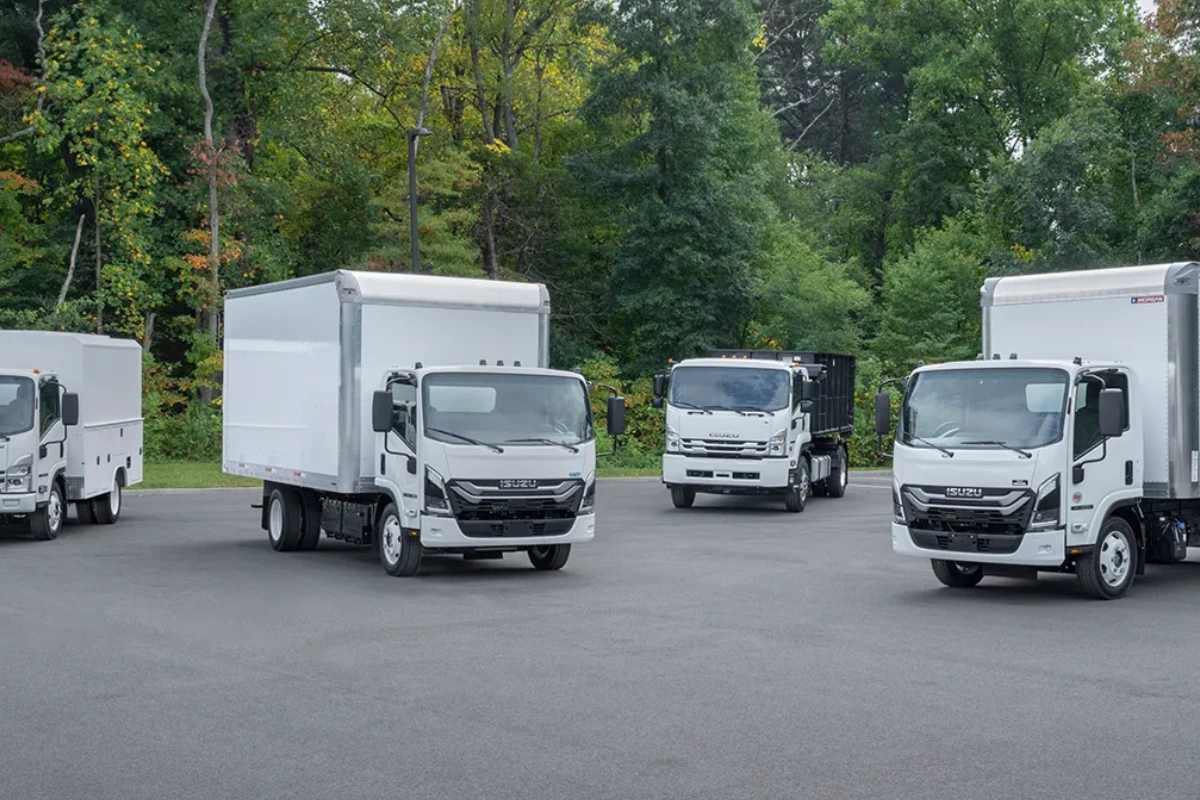
Isuzu trucks are built for buyers who care less about badge drama and more about uptime, payload, turning radius, and how a truck behaves after years of hard work. In the U.S. commercial market, that usually means choosing between the N-Series Gas, N-Series Diesel, F-Series, and the newer NRR EV. Isuzu also says it has been the best-selling low cab forward truck brand in America every year since 1986, which matters because these trucks are designed first for work, not image.
What makes Isuzu trucks especially appealing for long term use is the same thing that makes them popular in dense delivery, moving, landscaping, and utility work. Their low cab forward layout improves visibility and maneuverability, and Isuzu says that design can create up to four extra feet of body length compared with a conventional-cab truck of similar wheelbase. That makes a real difference when a fleet needs more cargo room without moving to a much larger footprint.
Best Isuzu Trucks at a Glance
The table below uses Isuzu’s official 2026 U.S. brochures and pocket guide, so it focuses on the numbers that matter most in commercial buying: class, powertrain, GVWR, payload allowance, and body-length flexibility.
| Truck | Class | Powertrain | Key Capability |
|---|---|---|---|
| Isuzu NRR Diesel | Class 5 | 5.2L diesel | 19,500-lb GVWR |
| Isuzu NRR Gas | Class 5 | 6.6L V8 gas | 19,500-lb GVWR |
| Isuzu FTR | Class 6 | Cummins B6.7 diesel | 25,950-lb GVWR |
| Isuzu FVR | Class 7 | Cummins B6.7 diesel | 33,000-lb GVWR |
| Isuzu NRR EV | Class 5 | 150-kW electric | 41–235 mi range |
Isuzu NRR Diesel
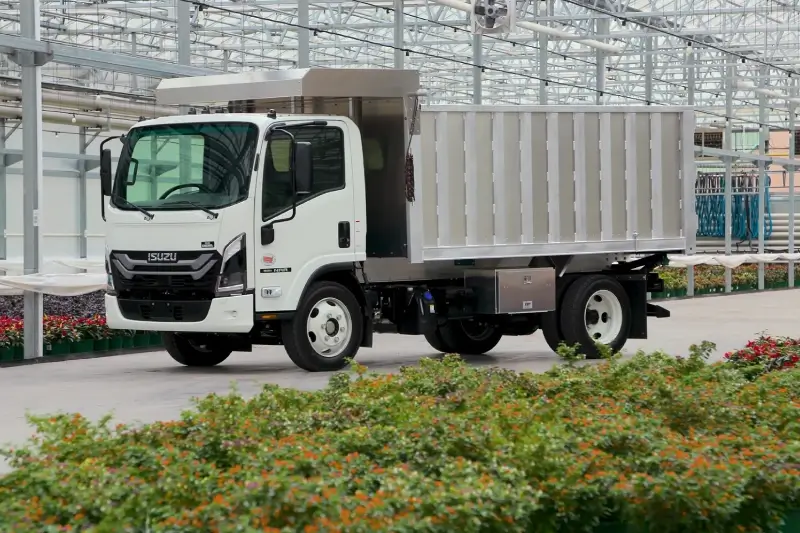
If you want one answer to the question of which Isuzu truck is best for heavy duty work and long term use, the NRR Diesel is the strongest all-round pick. Isuzu gives it a 5.2-liter turbo-diesel with 215 hp and 452 lb-ft of torque, a 19,500-lb GVWR, and payload ratings up to 12,970 pounds. Just as important, Isuzu rates the diesel engine with a B10 durability figure of 375,000 miles and offers diesel extended warranty coverage up to 60 months or 200,000 miles.
That is the kind of spec sheet that makes sense for fleets that run hard every day. You get Class 5 capability, crew-cab availability, wheelbases up to 212 inches, and bodies up to 24 feet, all in the same low-cab-forward layout that makes residential streets and tight loading areas less stressful to work in.
There is also outside evidence that the NRR Diesel holds up in real service. Work Truck named it the 2025 Medium-Duty Truck of the Year, and fleet users interviewed by the publication praised its maneuverability, fuel efficiency, reliability, and fit for demanding daily work.
Isuzu NRR Gas
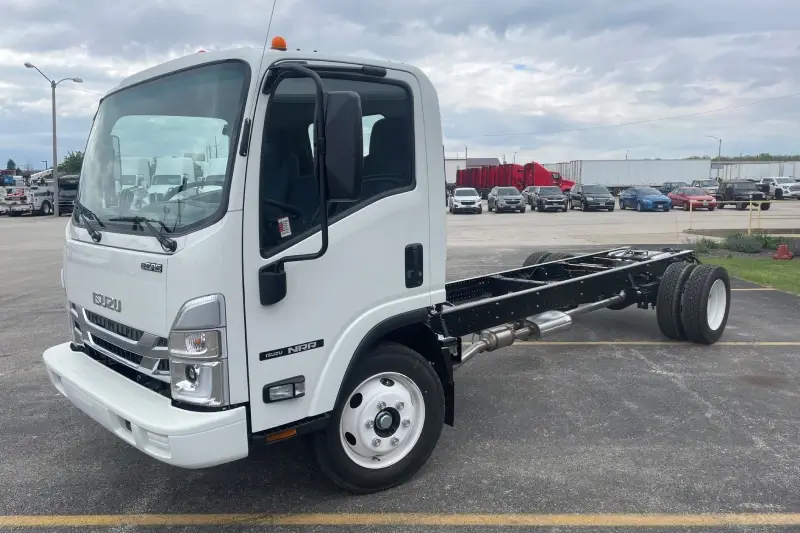
The NRR Gas is the Isuzu truck for fleets that want strong payload and easier ownership without diesel emissions complexity. Isuzu’s 6.6-liter V8 makes 350 hp and 425 lb-ft, and the NRR Gas reaches a 19,500-lb GVWR with published payload figures ranging from 12,606 to 13,611 pounds. It also carries an Isuzu-stated engine design life of 200,000 miles and gas extended warranty coverage up to 60 months or 150,000 miles.
That makes the NRR Gas especially appealing for businesses that value uptime, easier service familiarity, and dense-route drivability over diesel torque or maximum long-haul efficiency. Work Truck also quoted one fleet operator saying they moved from diesel to gas and saw better uptime with fewer issues, which is exactly the kind of real-world logic that keeps gas trucks relevant in commercial work.
For contractors, delivery companies, and local fleets that want a serious truck without stepping into heavier Class 6 territory, the NRR Gas is one of the smartest Isuzu trucks in the current range.
Isuzu FTR
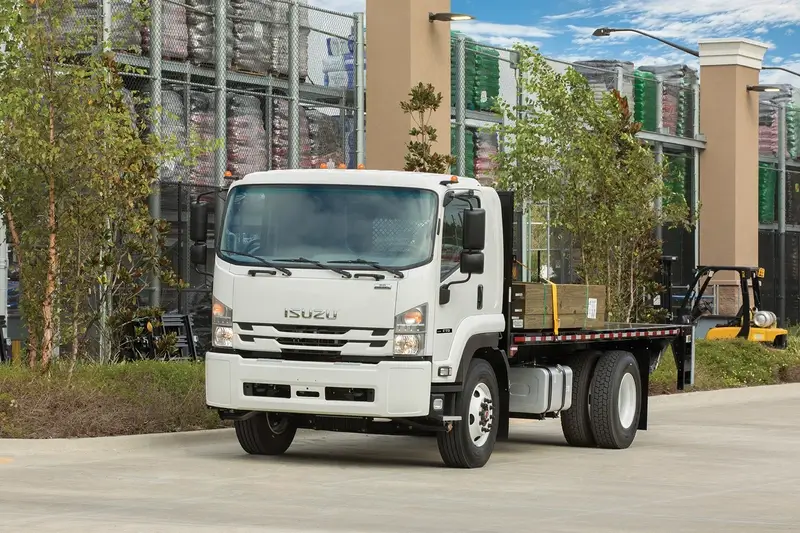
Once the work gets heavier, the FTR becomes the most important truck in the Isuzu lineup. This Class 6 model uses the Cummins B6.7 diesel with 260 hp and 660 lb-ft, offers a 25,950-lb GVWR and 30,000-lb GCWR, and can carry up to 16,264 pounds of body and payload allowance depending on wheelbase. Isuzu also supports bodies from roughly 14 to 30 feet, which opens the door to box, beverage, reefer, rollback, and specialized vocational applications.
This is where Isuzu trucks stop feeling like simply nimble city cab-overs and start feeling like serious heavy-work tools. In the same Work Truck fleet feature, one operator said FTR performance with the Cummins engine was outstanding and reported dispatch reliability in the high 90th percentile, which is exactly what buyers want to hear when long-term productivity is the goal.
The FTR is the best Isuzu truck for buyers who need more than an N-Series can comfortably deliver but still want the visibility and maneuverability advantages of a low cab forward design.
Isuzu FVR
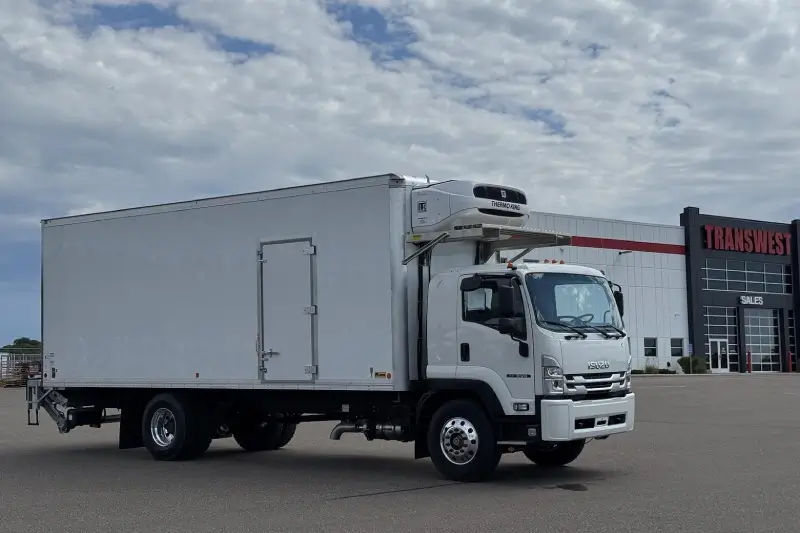
The FVR is the heaviest mainstream workhorse in this group, and it is the right answer when Class 6 starts to feel small. Isuzu rates the FVR at a 33,000-lb GVWR, with body and payload allowance up to 22,989 pounds, while keeping the same 260-hp and 660-lb-ft Cummins powertrain family used in the FTR. Like the FTR, it supports long wheelbases and bodies up to about 30 feet.
For long term use, the FVR matters because it gives buyers a way to stay in the Isuzu ecosystem even as job demands grow. If you run larger dry freight bodies, beverage work, regional service bodies, or heavier straight-truck applications, this is the Isuzu truck that best matches that reality.
The trade-off is obvious. The FVR is bigger, heavier, and more specialized than what many small businesses actually need. But if your work is truly heavy, it is the Isuzu truck here with the most headroom before you outgrow it.
Isuzu NRR EV
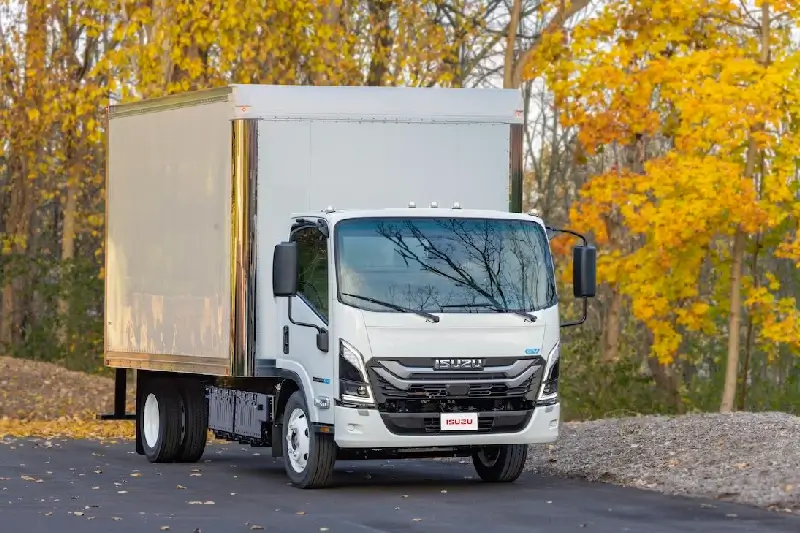
The NRR EV is not the best Isuzu truck for every business, but it is the smartest one for the right route structure. Isuzu gives it a Class 5 19,500-lb GVWR, four battery choices from 60 to 180 kWh, body support up to 20 feet, and estimated range from 41 to 235 miles depending on battery count and configuration. It also supports Level 2 AC and Level 3 DC fast charging through J1772 and CCS1 connectors.
What makes it more than a compliance truck is how vocationally useful Isuzu tried to make it. The NRR EV includes standard ePTO capability, which can supply high-voltage power to equipment like refrigeration units and power inverters, and Isuzu360 registration covers recommended scheduled maintenance for up to five years or 100,000 miles at no extra charge.
That means the NRR EV works best for urban fleets with predictable return-to-base routes, clean-air goals, or customers who specifically value zero-emission delivery. It is less universal than the diesel and gas trucks, but for the right fleet it is one of the most forward-looking Isuzu trucks on sale now.
Capability Comparison Chart
This quick chart compares the maximum published body-and-payload figures across the core Isuzu trucks discussed above. It shows why the F-Series matters once work gets truly heavy, while the N-Series remains the sweet spot for dense-route commercial use.
| Truck | Payload |
|---|---|
| NRR EV | 12,951 lbs |
| NRR Diesel | 12,970 lbs |
| NRR Gas | 13,611 lbs |
| FTR | 16,264 lbs |
| FVR | 22,989 lbs |
How These Isuzu Trucks Compare with Each Other
The easiest way to shop Isuzu trucks is to match the lineup to your job instead of choosing by brand loyalty. For tight-route maneuverability and long-term diesel durability, the NRR Diesel is the strongest overall choice. Buyers looking for simpler gas ownership with competitive Class 5 payload will find the NRR Gas a better fit. Heavier, body-intensive work is where the FTR shines. Fleets requiring even greater capacity should move up to the FVR.
The NRR EV sits apart from the rest because it is less about universal truck duty and more about route suitability. For a mixed-duty fleet, diesel or gas will still be easier to recommend. For return-to-base urban work with sustainability goals, the EV can become the smarter long-term play.
Pros and Cons
Pros
- Isuzu trucks combine low-cab-forward visibility, maneuverability, and body-length efficiency.
- The diesel lineup is backed by strong durability and extended-warranty support.
- The FTR and FVR give buyers real heavy-work options without leaving the Isuzu platform.
- The NRR EV adds genuine vocational EV flexibility, not just zero-emission marketing.
Cons
- N-Series trucks are highly capable, but some buyers will still need the extra capacity of the F-Series.
- The NRR EV only makes full sense on routes that match its charging and range profile.
- Gas, diesel, and EV versions each have different maintenance, warranty, and use-case strengths, so there is no one-size-fits-all answer.
FAQs
Most buyers should start with the NRR Diesel because it balances Class 5 capability, tight maneuverability, long-life durability, and strong uptime.
For fleets that want gas power and fewer diesel-emissions concerns, the NRR Gas is the smart Isuzu choice for urban hauling and long use every day.
The FTR is the best Isuzu truck for heavier Class 6 work, offering Cummins diesel torque, up to 16,264 pounds of payload, and long-body flexibility.
The NRR EV works best on defined urban routes, where its 19,500-pound GVWR, body-fit flexibility, and up to 235 miles of range can pay off well.
Isuzu trucks earn long-term trust through cab-forward maneuverability, durable powertrains, service programs, and warranty support built for fleets.
Conclusion
The best Isuzu trucks for heavy duty work and long term use depend on how your business actually works. The NRR Diesel is the best overall choice for most fleets because it blends durability, Class 5 usefulness, and everyday maneuverability. The NRR Gas is the smart option for buyers who want gas simplicity. The FTR is the truck to buy when work gets materially heavier, and the FVR is the right step when payload and body size matter more than compactness. The NRR EV is the future-facing choice for fixed-route fleets that can truly use an electric truck properly.
In simple terms, choose the NRR Diesel for the best all-round commercial value, the NRR Gas for easier gas-powered ownership, the FTR or FVR for heavier work, and the NRR EV for the right urban zero-emission duty. That is why Isuzu trucks remain so easy to respect in the work-truck world: they are built around the job first, and everything else second.
