



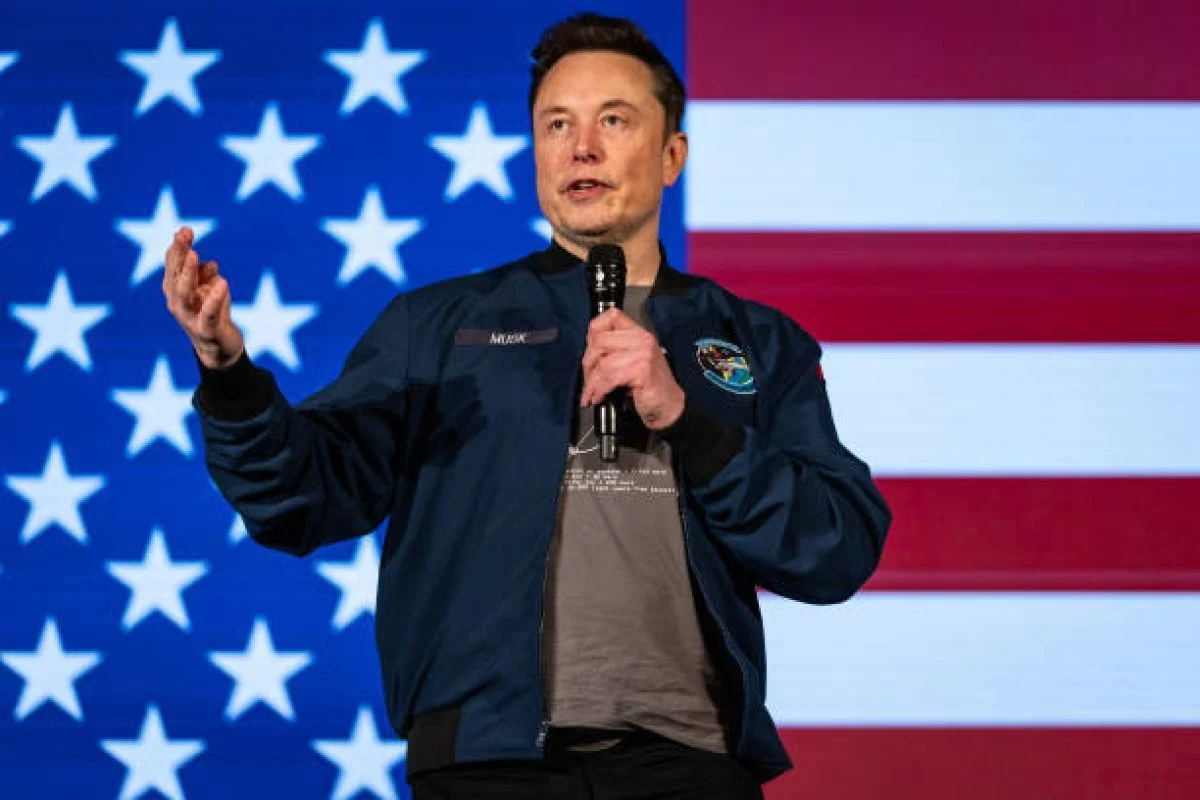
Some people are born into greatness. Elon Musk built his from scratch, brick by painful brick, through failure, ridicule, and near-bankruptcy. Today, his name sits alongside Edison, Ford, and Jobs as someone who genuinely reshaped the world he lived in. But the complete Elon Musk biography is not just a story of wealth. Rather, it is a story of obsession, sacrifice, and a kind of relentless forward momentum that most people find difficult to even imagine.
His empire spans Tesla, SpaceX, Neuralink, The Boring Company, and xAI. Critics have called him a genius, a fraud, a visionary, and a madman. Often by the same people, in the same week.
This Elon Musk success story will walk you through his entire journey, from a shy, bookish child in South Africa to the wealthiest person on the planet. Whether you admire him or question him, his life story remains one of the most fascinating of our time.
Elon Musk Biography
| Field | Details |
|---|---|
| Full Name | Elon Reeve Musk |
| Born | June 28, 1971 |
| Birthplace | Pretoria, South Africa |
| Nationality | South African, Canadian, American |
| Education | Queen’s University; University of Pennsylvania |
| Companies | Tesla, SpaceX, Neuralink, The Boring Co., xAI |
| Occupation | Entrepreneur, Engineer, CEO |
| Net Worth | ~$300–400 billion |
| Known For | EVs, SpaceX, AI, X (Twitter) |
Early Life: A Boy Who Read Everything
Elon Musk was born on June 28, 1971, in Pretoria, South Africa, to Errol Musk, an electromechanical engineer, and Maye Musk, a dietitian and model. His parents divorced when he was nine, and that separation left a mark. Against advice, Musk chose to stay with his father, a decision he later admitted was a mistake.
A Difficult Childhood
Childhood was not easy by any measure. Small, introverted, and relentlessly picked on at school, Musk endured bullying that turned physical on more than one occasion. Bullies once threw him down a staircase and beat him badly enough that he required hospitalization. By his own description, he was a bookworm with no real social life.
What he had instead was an insatiable hunger for information. Science fiction, philosophy, and technical manuals all got the same treatment: he tore through them with equal enthusiasm. By the time he was ten, he had read the entire Encyclopedia Britannica. By twelve, he had taught himself to code.
The First Sale
That coding instinct led directly to his first product: a simple space-themed video game called Blastar. He sold the source code to a South African PC magazine for approximately $500. For a twelve-year-old in 1983, that was not a small sum. More importantly, it served as proof that an idea in his head could become something real and valuable.
School, he found, was mostly something to endure. Bored in class and socially isolated outside of it, he leaned on books as his sanctuary. Science fiction writers like Isaac Asimov and Robert Heinlein gave him a framework for thinking big, not just practically big, but civilizationally big.
Education: The Long Road to Silicon Valley
At seventeen, Musk left South Africa. The move to Canada in 1989 was partly to avoid mandatory military service and partly to get closer to the United States, where he believed the real opportunities were.
He enrolled at Queen’s University in Kingston, Ontario, where he began to build something he had never quite had before: a social circle. Engaged, curious, and starting to find his footing, he spent two years there before making his next move.
Subsequently, he transferred to the University of Pennsylvania, one of the Ivy League schools. There, he earned a Bachelor of Science in Economics from the Wharton School and a Bachelor of Arts in Physics. Two degrees from Penn is no small achievement, but Musk never saw academia as the destination.
In 1995, he was accepted into a Stanford University PhD program in energy physics. Remarkably, he lasted two days before dropping out. The internet was exploding, and he did not want to study the future. Instead, he wanted to build it.
First Businesses: Learning the Cost of Winning
Zip2
With his brother Kimbal, Musk founded Zip2 in 1995. The idea was straightforward: an online city guide for newspapers. Essentially, an early Google Maps merged with a business directory, it arrived years before either concept existed commercially. Newspapers like The New York Times and Chicago Tribune licensed the software.
In 1999, Compaq acquired Zip2 for approximately $307 million. Musk walked away with around $22 million at the age of twenty-seven.
What he learned: Speed matters. So does timing. And sometimes you have to sell before you feel ready.
X.com and PayPal
Next, he poured $10 million of his Zip2 money into X.com, an online financial services company. X.com eventually merged with a competitor called Confinity, which had a product called PayPal. After internal battles and a boardroom coup that briefly removed Musk as CEO, PayPal emerged as the dominant product.
When eBay acquired PayPal in 2002 for $1.5 billion, Musk received approximately $165 million as the largest shareholder.
What he learned: Even when you build something great, you can lose control of it. The lesson stuck permanently. Every company he has built since, he has kept tight control over.
Building an Empire
Tesla
Musk did not found Tesla. He joined it in 2004 as chairman and lead investor, a year after engineers Martin Eberhard and Marc Tarpenning started the company. He became CEO in 2008 during one of its darkest moments.
The early years were brutal. The Roadster, Tesla’s first car, was plagued by production delays and cost overruns. Moreover, the company nearly went bankrupt. On Christmas Eve 2008, Musk later admitted, Tesla had enough money for one more payroll.
From Survival to Dominance
Against the odds, he pulled it through. The Model S launched in 2012 to critical acclaim and proved that electric vehicles could be genuinely desirable, not just practical compromises. The Model 3, aimed at a mass market price point, subsequently became one of the best-selling cars in the world. By 2023, Tesla had delivered over 1.8 million vehicles in a single year.
Ultimately, the Elon Musk Tesla story is not just about cars. It is about changing an entire industry’s assumptions about what was possible. Tesla has become shorthand for the EV revolution itself.
SpaceX
In 2002, Musk founded Space Exploration Technologies, better known as SpaceX. His stated mission was, and remains, to make humanity multiplanetary. He started with roughly $100 million of his PayPal proceeds.
The first three launches of the Falcon 1 rocket failed. The fourth, in 2008, succeeded. Critically, that success secured a NASA contract worth $1.6 billion and saved the company from collapse.
Rewriting the Rules of Spaceflight
SpaceX went on to develop the Falcon 9, the first orbital rocket to successfully land its booster for reuse. This single achievement fundamentally changed the economics of spaceflight in ways that even NASA had not managed. The Dragon spacecraft has since carried NASA astronauts to the International Space Station multiple times.
Starship, the massive fully reusable rocket still in development, is designed to carry humans to the Moon and eventually Mars. Its test flights progressed significantly through 2024 and 2025, with each iteration demonstrating more complete mission profiles.
Neuralink
Founded in 2016, Neuralink is developing implantable brain-computer interface technology. The goal is to allow people with paralysis to control devices through thought alone, and potentially to address neurological conditions ranging from depression to blindness.
In early 2024, the first human patient received a Neuralink implant. Remarkably, that patient was later able to control a computer cursor using only thought. The long-term vision includes the possibility of deeper symbiosis between human cognition and artificial intelligence.
The Boring Company
The Boring Company was born from Musk’s frustration with Los Angeles traffic. Founded in 2016, it aims to build a network of underground tunnels for high-speed transportation, reducing urban congestion without the footprint of elevated infrastructure.
Its most prominent completed project is the Las Vegas Convention Center Loop, a tunnel system that ferries passengers in Tesla vehicles between convention center halls. Larger projects are in various stages of development across other cities.
xAI
Musk founded xAI in 2023, positioning it as an AI research company focused on building systems that seek to understand the nature of the universe. Its flagship product, the Grok chatbot, is integrated into X (formerly Twitter). He has been vocal about his concerns that AI development, if not conducted with strong safety principles, poses existential risks. Consequently, xAI is his attempt to build a safer, more transparent alternative.
Leadership Style: Visionary, Demanding, Polarizing
Musk is known for setting targets that most engineers consider impossible, then driving his teams to hit them anyway. His work ethic is legendary. Consistently, he has spoken about working 80-to-100-hour weeks across multiple decades simultaneously across several companies.
Strengths and Criticisms
He tends to flatten hierarchies, preferring engineers to have direct access to him rather than filtering information through layers of management. Questions flow relentlessly, and he expects precise answers in return.
His critics, including many former employees, describe a management style that can cross into cruelty. He has publicly fired people, mocked employees on social media, and set deadlines that teams describe as physically and emotionally unsustainable. Clearly, the culture at companies he runs is not for everyone.
Nevertheless, his strengths include an extraordinary ability to synthesize complex technical and business information, a genuine tolerance for risk that borders on recklessness, and an intuitive sense of where emerging technologies are heading.
Biggest Challenges
No honest Elon Musk biography glosses over the difficulties.
Financial Crises and Near-Collapses
In 2008, Tesla and SpaceX were both on the edge of collapse at the same time. Musk borrowed money from friends to make payroll. The stress, he said later, was beyond anything he had ever experienced. Somehow, both companies survived.
Tesla has since faced multiple production crises, most notably the notoriously difficult ramp-up of the Model 3 in 2017 and 2018. During that period, Musk famously slept on the factory floor.
Controversies and Legal Issues
SpaceX lost three rockets before its first successful launch, consuming tens of millions of dollars with each failure. His 2022 acquisition of Twitter, rebranded as X, was contentious from the start. The $44 billion purchase triggered mass layoffs, advertiser departures, and ongoing legal disputes. The company’s valuation dropped sharply in the months that followed.
Beyond the business challenges, Musk has also faced numerous personal controversies, regulatory investigations, and public feuds that have at various times damaged his reputation and affected the stock prices of his companies.
Timeline Table
| Year | Event |
|---|---|
| 1971 | Born in Pretoria, South Africa |
| 1983 | Sells Blastar game code at age 12 |
| 1989 | Moves to Canada |
| 1992 | Transfers to University of Pennsylvania |
| 1995 | Drops out of Stanford; co-founds Zip2 |
| 1999 | Zip2 sold for $307M; starts X.com |
| 2002 | PayPal sold for $1.5B; founds SpaceX |
| 2004 | Joins Tesla as chairman/investor |
| 2006 | Helps found SolarCity |
| 2008 | Becomes Tesla CEO; first Falcon 1 success |
| 2012 | Tesla Model S launches |
| 2015 | Co-founds OpenAI |
| 2016 | Founds Neuralink & The Boring Co. |
| 2017 | Tesla Model 3 production begins |
| 2020 | SpaceX crewed Dragon mission |
| 2021 | Becomes world’s richest person (briefly) |
| 2022 | Buys Twitter (X) |
| 2023 | Founds xAI |
| 2024 | Neuralink human implant; Starship progress |
Elon Musk Companies Comparison
| Company | Founded | Purpose | Status |
|---|---|---|---|
| Tesla | 2003 | EVs & clean energy | Public automaker |
| SpaceX | 2002 | Space travel & Mars | Private, leading globally |
| Neuralink | 2016 | Brain interfaces | Human trials |
| The Boring Co. | 2016 | Tunnel transport | Active (Las Vegas) |
| xAI | 2023 | AI research | Active (Grok) |
| X (Twitter) | 2022 | Social media | Private |
Biggest Achievements
- Founded SpaceX and developed the world’s first commercially viable reusable orbital rocket
- Turned Tesla into the world’s most valuable automaker at its peak
- Became the first private company to ferry NASA astronauts to the International Space Station
- Successfully completed the first crewed private spacecraft landing and recovery
- Pioneered the commercial electric vehicle market and accelerated global EV adoption by years
- Developed the Starlink satellite internet network, now serving millions of users globally
- Performed the first human Neuralink implant in 2024
- Briefly held the title of wealthiest individual in human recorded history
Interesting Facts
- Musk moved to Canada at seventeen with almost no money, working farm and lumber jobs to survive
- Bullying in school was so severe that he was once hospitalized after an attack
- At age ten, he taught himself to code from a Commodore VIC-20 manual
- He has ten children with three women
- Musk personally tests SpaceX software and has been known to identify bugs in rocket code
- His first car was a 1978 BMW 320i, bought for $1,400
- He sleeps about six hours a night and reportedly prefers to skip breakfast
- Musk appeared as himself in an episode of The Simpsons and in the film Iron Man 2
- Before founding SpaceX, he spent six months reading rocket technology textbooks before deciding to simply build his own rockets
Pros and Cons
| Strengths | Criticisms |
| Extraordinary vision and long-term thinking | Management style described as harsh and erratic |
| Willingness to bet everything on high-risk ventures | Multiple controversies on social media |
| Ability to attract top engineering talent | Tesla and SpaceX worker safety concerns raised repeatedly |
| Accelerated global EV and space tech timelines | Twitter/X acquisition widely seen as destructive to platform trust |
| Genuine technical knowledge, not just business acumen | Has made inaccurate public predictions about product timelines |
| Built multiple companies to global scale simultaneously | Regulatory clashes with SEC and other agencies |
Lessons Entrepreneurs Can Learn
- First principles thinking works. Musk famously breaks problems down to their fundamental components rather than accepting industry assumptions. When he found that rocket components were priced at a premium, he sourced the raw materials himself and built in-house.
- Failure is data, not defeat. Three Falcon 1 failures would have ended most companies. Instead, Musk treated each one as an engineering lesson and kept going.
- Hire for talent, not for credentials. Musk has consistently hired engineers without traditional credentials if they demonstrated exceptional problem-solving ability.
- Risk is not the enemy. Timidity is. Every major Musk company was founded at a point when most people thought the idea was impossible. The willingness to be wrong in public is a feature, not a bug.
- Feedback loops matter. Musk insists on short feedback cycles between design, testing, and iteration. The approach is not about carelessness. Rather, it is about not letting perfect become the enemy of real progress.
- Capital follows conviction. Musk reinvested his entire Zip2 and PayPal proceeds into his next ventures and was nearly broke in 2008. That level of commitment to a vision attracts the people and resources needed to realize it.
FAQs
Musk grew up in Pretoria, South Africa. He moved to Canada at seventeen and later to the United States, where he attended the University of Pennsylvania.
No. Tesla was founded in 2003 by Martin Eberhard and Marc Tarpenning. Musk joined in 2004 as the lead investor and chairman, and later became CEO in 2008.
His first major financial success came from the sale of Zip2, a software company he co-founded with his brother Kimbal, to Compaq for approximately $307 million in 1999. He then earned a larger sum when eBay acquired PayPal for $1.5 billion in 2002.
Yes. SpaceX’s Crew Dragon spacecraft has carried multiple crews of NASA astronauts to the International Space Station, beginning in 2020, making it the first commercial vehicle to do so.
As of 2025, Musk is CEO of Tesla, SpaceX, and X. He also leads Neuralink and xAI, and remains the founder and chief executive of The Boring Company.
Conclusion
The Elon Musk life story does not fit neatly into any single genre. It is not a pure hero’s journey. Nor is it a cautionary tale. Instead, it is something messier, more human, and ultimately more interesting than either.
He has genuinely changed multiple industries. Along the way, however, he has also made mistakes, said harmful things, treated people poorly, and shown that being the smartest person in the room does not make you the wisest. His career timeline is a long argument for audacity, but not necessarily for comfort or kindness.
