



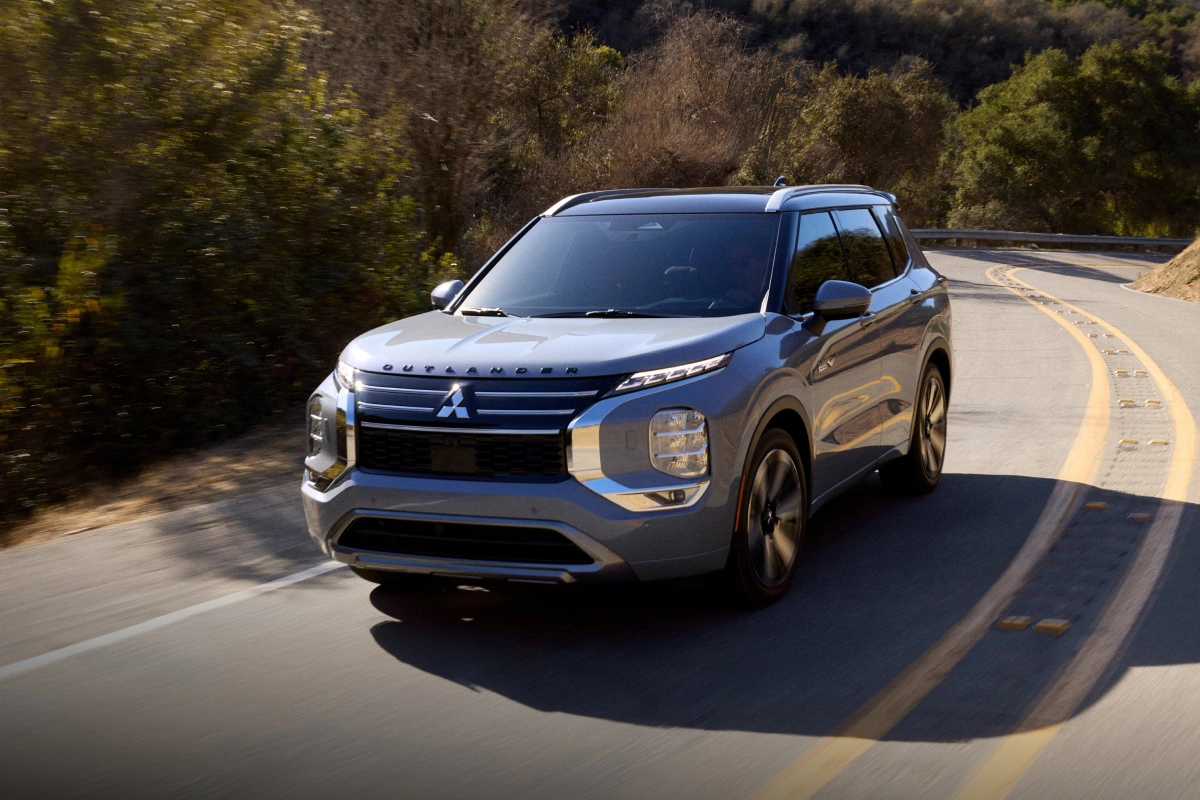
The Mitsubishi Outlander PHEV makes sense for families because it tries to solve more than one problem at the same time. It gives buyers plug-in electric driving for short daily trips, standard all-wheel drive for year-round confidence, and a three-row layout that can handle up to seven passengers when needed. In the U.S., the current on-sale model is the 2025 Mitsubishi Outlander PHEV, starting at $40,445, with up to 38 miles of electric range, 420 miles of total range, and 64 MPGe.
That combination is what makes the Outlander PHEV different from many family SUVs. It is not the cheapest option in its class, and it is not the roomiest three-row model either, but it brings together plug-in efficiency, family flexibility, and a generous warranty package in a way that still feels usable in everyday life. Mitsubishi also gives every Outlander PHEV twin-motor Super All-Wheel Control, a 20.0 kWh battery, and 7-passenger seating as part of the package.
Mitsubishi Outlander PHEV at a Glance
The table below is based on Mitsubishi’s current official U.S. specs for the 2025 Outlander PHEV.
| Item | Mitsubishi Outlander PHEV |
|---|---|
| Starting MSRP | $40,445 |
| Electric range | Up to 38 miles |
| Total range | Up to 420 miles |
| Efficiency | 64 MPGe |
| Battery | 20.0 kWh lithium-ion |
| Seating | 7 passengers |
| Drivetrain | Twin-motor S-AWC all-wheel drive |
| Max towing | 1,500 lbs |
| Cargo space | 30.8 cu ft behind front seats, up to 64.7 cu ft max |
| Battery warranty | 10 years or 100,000 miles |
Daily Driving Is Where the Biggest Benefit Shows Up
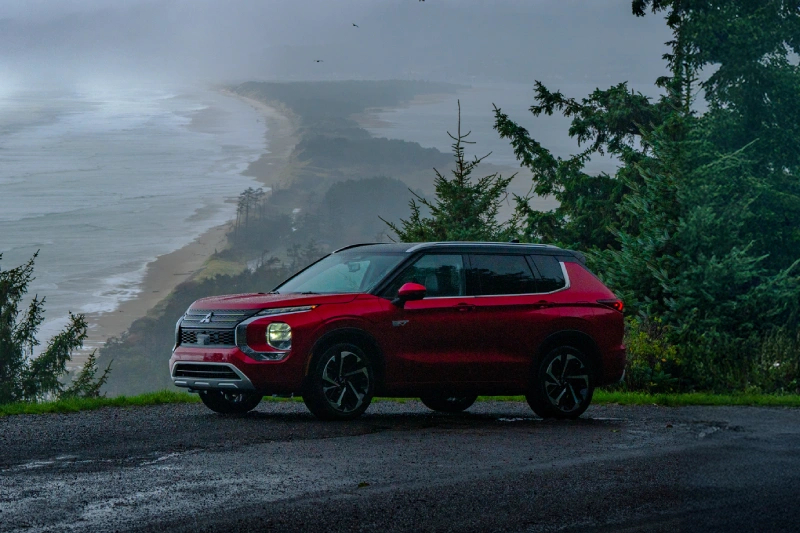
For a lot of family buyers, the strongest benefit of the Mitsubishi Outlander PHEV is not some headline spec. It is the way the SUV fits school runs, grocery stops, daycare drop-offs, and short commutes. Mitsubishi says the vehicle can travel up to 38 miles on electric power alone, which means many local trips can happen without using gasoline at all. The SUV also includes EV Priority, Save, and Charge modes, so parents can choose when to preserve battery power and when to use it.
That matters because family driving is often repetitive and predictable. If most weekday miles happen close to home, the Outlander PHEV can behave a lot like an EV during the week while still keeping gasoline backup for weekends, road trips, or colder weather. Mitsubishi even frames EV Priority mode as useful for quiet neighborhood driving during an early-morning commute.
Standard All-Wheel Drive Adds Real Family Value
Another big reason the Mitsubishi Outlander PHEV stands out is that all-wheel drive is not an expensive extra. Mitsubishi includes Twin Motor S-AWC as standard, and that gives family buyers more confidence in rain, gravel, and winter conditions without having to climb higher in the trim ladder. For households in colder regions, that is a meaningful value point.
This is also where the Outlander PHEV feels more premium than some people expect. Car and Driver highlights its modern and refined cabin, smooth ride quality, and generous warranty coverage, while Edmunds says the cabin feels spacious, comfortable, and premium enough that many shoppers would not immediately guess how much it shares under the skin with the Rogue.
The Third Row Is Useful, but It Is Not a Magic Trick
A lot of family buyers will look at the Mitsubishi Outlander PHEV because it offers seven-passenger seating. That is a real advantage, especially for parents who occasionally need to carry extra kids, grandparents, or teammates. Mitsubishi includes the third row even on the base trim, and official cargo specs show 30.8 cubic feet of cargo space behind the front seats and 64.7 cubic feet maximum with seats folded.
Still, this is where expectations need to stay realistic. Car and Driver lists the very limited third-row space as one of the vehicle’s weaknesses, and Edmunds says the extra row is best seen as occasional-use flexibility rather than true adult-sized space. For family buyers, that is still helpful. The third row is a bonus seat solution, not the main reason to buy the vehicle.
Comfort, Safety, and Tech Make It Easier to Live With
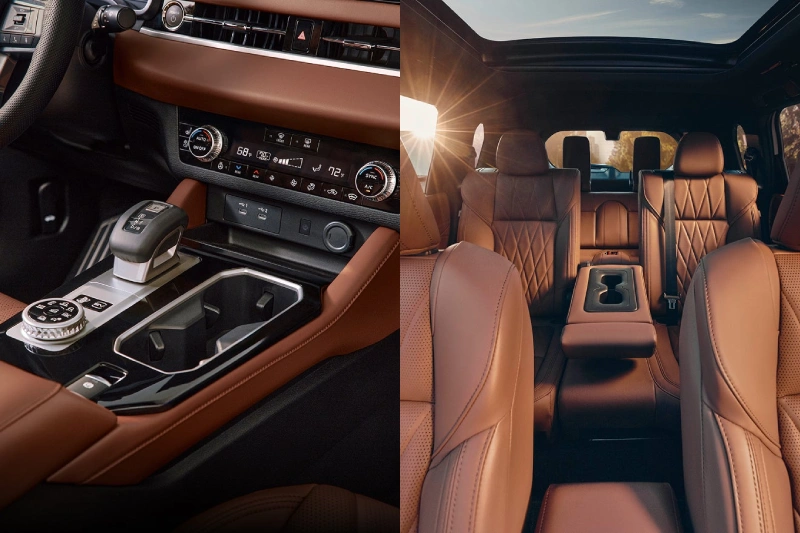
The Mitsubishi Outlander PHEV works best when it is treated as a daily family machine, and Mitsubishi has equipped it with the features expected in that role. Even the base model includes a 12.3-inch digital driver display, heated front seats, forward collision mitigation, blind spot warning, rear cross traffic alert, and rear automatic emergency braking. Higher trims add items such as MI-PILOT Assist, larger wheels, and more comfort features.
Reviewers back up the family-use angle here too. Edmunds says the front seats are great for longer trips and that second-row passengers also get decent room, while Car and Driver points to the refined interior and smooth ride. That combination is important because family buyers usually notice comfort every single day, long before they start caring about niche powertrain details.
Ownership Value Is Better Than the Price Tag First Suggests
At first glance, the Mitsubishi Outlander PHEV may look expensive compared with the regular Outlander. The 2026 gas Outlander starts at $29,995, while the current 2025 Outlander PHEV starts at $40,445. That is a big gap. But the PHEV version gives buyers electric commuting ability, standard AWD, a larger technology load, and Mitsubishi’s long warranty support, including a 10-year or 100,000-mile battery warranty and a 5-year or 60,000-mile new vehicle limited warranty for original owners.
There are trade-offs, of course. The official towing limit is only 1,500 pounds, and Mitsubishi notes that DC fast charging is limited to CHAdeMO systems. That means it is better to think of the Outlander PHEV as a family commuter with road-trip ability, not a heavy-duty tow rig or charging-network champion.
Family Benefit Chart
This quick chart shows where the Mitsubishi Outlander PHEV delivers the most value for family use. All figures are based on Mitsubishi’s official specs.
| Family Need | Outlander PHEV Value |
|---|---|
| Daily electric errands | Up to 38 miles EV range |
| Weekend travel confidence | 420 miles total range |
| Winter and rain traction | Standard twin-motor AWD |
| Extra passenger flexibility | 7-passenger seating |
| Light family hauling | 1,500-lb towing capacity |
| Long-term ownership peace of mind | 10-year/100,000-mile battery warranty |
How It Compares with the Regular Outlander and the Coming 2026 Refresh
Compared with the regular Outlander, the PHEV version is the smarter pick for families who do lots of short local driving and want lower fuel use plus quieter low-speed operation. The gas model wins on entry price, but the plug-in model adds electric commuting, standard AWD, and a more specialized ownership advantage for households that will actually plug in and use the battery often.
There is also a timing angle to consider. Mitsubishi has already announced a 2026 Outlander PHEV refresh with a larger-capacity battery, more all-electric range, revised styling, a redesigned interior with more sound-deadening, and updated ride and steering tuning. Mitsubishi says pricing and full technical details will come closer to launch. That means the current 2025 model already makes sense for many families, but buyers who are not in a hurry may want to watch the 2026 update closely. (Mitsubishi Newsroom)
Pros and Cons
Pros
- Useful plug-in range for local family driving.
- Standard all-wheel drive across the lineup.
- Seven-seat flexibility in a compact family SUV.
- Strong warranty support for long-term ownership.
Cons
- The third row is tight for adults.
- Towing capacity is modest.
- CHAdeMO-only DC fast charging is a limitation.
- The upfront price is much higher than the regular Outlander.
FAQs
Yes. The Outlander PHEV suits families who want electric driving for short trips, standard AWD, and occasional third-row flexibility in one SUV.
The current Outlander PHEV offers up to 38 miles of electric range, which is enough for many school runs, errands, and short daily commutes.
Yes. Standard twin-motor Super All-Wheel Control gives the Outlander PHEV year-round traction and extra confidence in rain, gravel, or snow.
The main drawbacks are its small third row, modest towing limit, and the fact that DC fast charging relies on the older CHAdeMO standard today.
It stands out by combining plug-in efficiency, seven-seat flexibility, standard AWD, and a long warranty at a more reachable price point for families.
Conclusion
The Mitsubishi Outlander PHEV is not the perfect family SUV, but it is one of the more interesting ones because it covers several real family priorities at once. It gives buyers electric-first daily driving, all-wheel-drive confidence, occasional third-row usefulness, and a cabin that reviewers say feels smoother and more premium than many people expect.
In simple terms, the biggest benefits for family car buyers are easy to understand. If your weekdays are full of short trips, if weather matters, and if you sometimes need extra seats without moving up to a much larger SUV, the Mitsubishi Outlander PHEV is a strong fit. If you want more space, more towing, or lower upfront cost, the regular Outlander or a bigger three-row SUV may make more sense.
