




Honda hybrid cars have become a smart choice for drivers who want lower fuel bills without giving up comfort, reliability, or everyday usability. In 2026, Honda’s mainstream hybrid lineup gives buyers three strong options for daily life: the Civic Sedan Hybrid, Accord Hybrid, and CR-V Hybrid. These models matter because they cover the needs of city commuters, long-distance drivers, and families who want better fuel economy without moving into a full EV right away.
What makes Honda hybrid cars especially appealing is their balance. They are not built only to post good MPG numbers. They also deliver usable cabins, smooth low-speed performance, practical tech, and familiar Honda dependability. On top of that, the Civic Hybrid has been praised by Edmunds as a complete package, the Accord remains a Car and Driver 10Best favorite, and the CR-V Hybrid continues to earn praise for comfort and family-friendly versatility.
Best Honda Hybrid Cars at a Glance
The main Honda hybrid cars for 2026 are the Civic Sedan Hybrid, Accord Hybrid, and CR-V Hybrid. Honda lists the Civic Sedan Hybrid at 50 city, 47 highway, and 49 combined MPG with 200 total system horsepower. The Accord Hybrid makes 204 horsepower and ranges from 44 combined MPG to 48 combined MPG, depending on trim. The CR-V Hybrid makes 204 horsepower and reaches 40 combined MPG in 2WD form.
The table below uses Honda’s 2026 specifications and pricing.
| Model | Starting MSRP | Total System Horsepower | EPA Fuel Economy |
|---|---|---|---|
| Honda Civic Sedan Hybrid | $29,395 | 200 hp | 50 city / 47 hwy / 49 combined |
| Honda Accord Hybrid | $33,795 | 204 hp | 46 city / 41 hwy / 44 combined (up to 48 combined on EX-L) |
| Honda CR-V Hybrid | $35,630 | 204 hp | 43 city / 36 hwy / 40 combined (2WD) |
Civic Sedan Hybrid
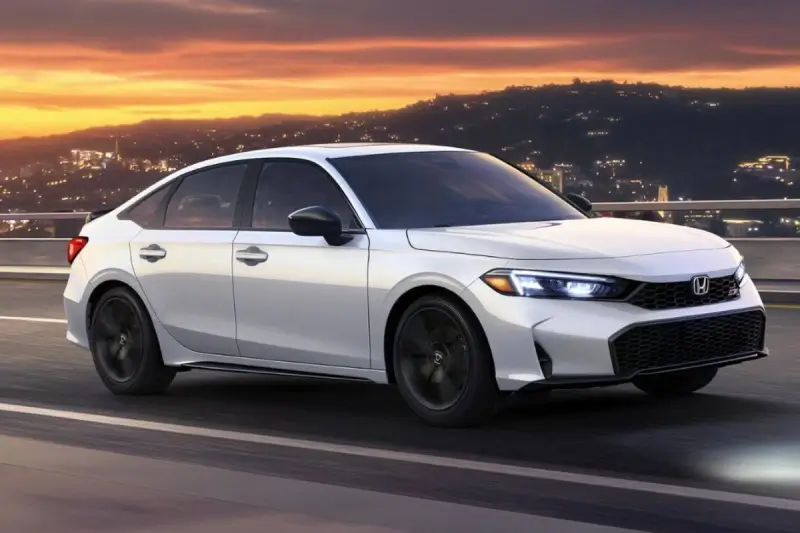
For pure fuel economy, the Civic Sedan Hybrid is the standout. Honda gives it 49 combined MPG, a 200-hp hybrid system, and a starting MSRP of $29,395. That makes it the most efficient mainstream Honda hybrid car for buyers who want a practical sedan that still feels responsive in traffic and easy to park in crowded areas.
The Civic also has a strong reputation beyond the spec sheet. Edmunds says the Civic Hybrid delivers comfort, refinement, a spacious interior, and excellent fuel economy, and notes 49 mpg combined in its own testing. That matters because daily driving is not only about numbers. It is about how relaxed the car feels on the way to work, how easy it is to place on the road, and whether it still feels enjoyable after months of routine use.
Its main limitation is size. The Civic is roomy for a compact sedan, but it does not offer the rear-seat openness of the Accord or the cargo flexibility of the CR-V Hybrid. Even so, for solo drivers, couples, and commuters who mostly travel in the city or suburbs, this is one of the best Honda cars for fuel economy and daily driving.
Accord Hybrid
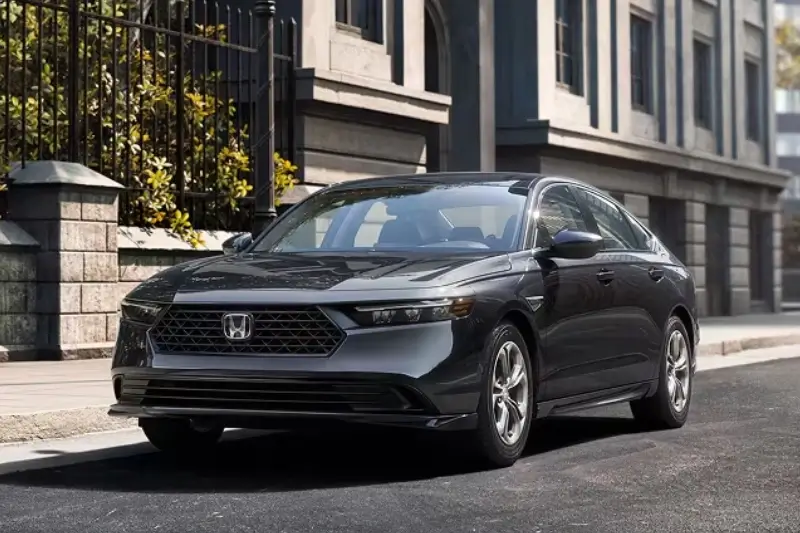
The Accord Hybrid is the most rounded sedan in Honda’s hybrid lineup. Official specs show 204 total system horsepower, a starting MSRP of $33,795, and as much as 48 combined MPG on the EX-L Hybrid trim. It also offers 16.7 cubic feet of cargo space, which helps it feel more useful for road trips, office bags, and family errands than many midsize rivals.
Where the Accord Hybrid really wins is comfort. Car and Driver says the Accord drives with effortless cohesion and highlights its supple ride and spacious rear seat. Edmunds recommends the EX-L Hybrid for buyers who want leather, heated seats, and smaller wheels that help it reach an EPA-estimated 48 mpg combined. In simple terms, the Accord Hybrid feels like the choice for people who spend serious time behind the wheel and want their daily commute to feel calmer and more polished.
This is the Honda hybrid car I would point to if someone wants the fewest compromises. It is more expensive than the Civic Hybrid, but it gives back more cabin space, a smoother highway feel, and a slightly more premium atmosphere without pushing into luxury-brand pricing.
CR-V Hybrid
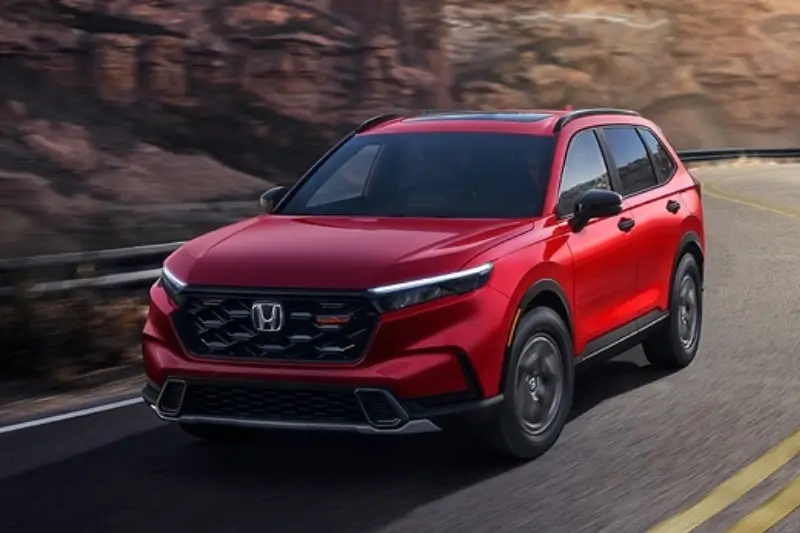
The CR-V Hybrid is the practical choice for buyers who need Honda hybrid cars with real family utility. Honda lists 204 hp, a starting MSRP of $35,630, and up to 40 combined MPG in 2WD form. It also offers 36.3 cubic feet of cargo space behind the second row on hybrid trims, which is a major jump over either sedan here.
Car and Driver describes the CR-V Hybrid as smart, satisfying, and sensible, while also noting that its interior is comfortable and spacious. Edmunds says the 2026 CR-V remains an excellent crossover SUV and points out that the lineup now includes the TrailSport trim, giving buyers an extra styling and adventure-focused option. These comments fit what many people actually want from a daily family SUV: easy access, comfortable seating, good fuel economy, and enough flexibility for groceries, school bags, and weekend trips.
Its trade-off is simple. You pay more than you do for the Civic or Accord, and you give up some MPG in exchange for space and ride height. Still, for households that need one vehicle to do almost everything, the CR-V Hybrid is the most versatile option in Honda’s hybrid range.
Fuel Economy Comparison Chart
The chart below makes the daily-driving value of these Honda hybrid cars easy to understand. Figures are based on official EPA combined ratings.
| Model | Combined MPG | Visual Bar |
|---|---|---|
| Civic Sedan Hybrid | 49 | ########## |
| Accord Hybrid EX-L | 48 | ######### |
| Accord Hybrid other trims | 44 | ######## |
| CR-V Hybrid 2WD | 40 | ####### |
How Honda Hybrid Cars Compare with Gas Alternatives
For buyers who are still unsure, the best comparison is not always against another brand. It is often against the gas-powered version of the same Honda. The Civic sedan starts at $24,695 and returns 36 combined MPG, while the Civic Sedan Hybrid starts at $29,395 and reaches 49 combined MPG. The Accord gas model starts at $28,395 with 32 combined MPG, while the hybrid starts at $33,795 and ranges from 44 to 48 combined MPG. The CR-V gas 2WD posts 30 combined MPG, compared with 40 combined MPG for the CR-V Hybrid 2WD.
That comparison shows why Honda hybrid cars are easy to justify for many daily drivers. The upfront price is higher, but the fuel economy gain is significant, especially in the Civic and CR-V. In the Accord, the hybrid version also adds a more refined feel, which makes the upgrade feel less like a sacrifice and more like a better overall car.
Pros and Cons
Pros
- Strong fuel economy across the lineup.
- Civic, Accord, and CR-V each serve a different daily-driving need well.
- Good blend of comfort, practicality, and easy drivability.
Cons
- Higher purchase price than comparable gas models.
- Civic is less roomy than the Accord and CR-V.
- CR-V Hybrid gives up some efficiency compared with the sedan hybrids.
FAQs
The Civic Sedan Hybrid leads Honda’s mainstream lineup with up to 49 combined MPG, making it the strongest choice for fuel-saving daily commuting.
The Accord Hybrid suits longer commutes with more rear-seat room, a calmer ride, and up to 48 combined MPG on the EX-L hybrid trim for buyers.
Yes. The CR-V Hybrid gives families strong space, easy access, and up to 40 combined MPG in 2WD form, a rare mix in a roomy daily SUV today.
Honda hybrids cost more up front, but their stronger MPG and easy daily usability can offset the premium for drivers who cover steady miles.
For most drivers, the Accord Hybrid is the best balance of comfort, efficiency, space, and everyday refinement, while the Civic saves the most fuel.
Conclusion
The best Honda hybrid cars for fuel economy and daily driving each have a clear role. The Civic Sedan Hybrid is the smartest buy for people who want maximum MPG and a compact car that still feels polished. The Accord Hybrid is the best all-round sedan for buyers who want more room, stronger highway comfort, and excellent efficiency. The CR-V Hybrid is the right choice for families who need SUV practicality without taking a big hit at the pump.
In simple terms, choose the Civic if fuel savings come first, choose the Accord if you want the best daily-driving balance, and choose the CR-V if space and flexibility matter most. That is why Honda hybrid cars remain some of the easiest electrified vehicles to recommend in 2026.
